
Falkirk FC AGM: Bairns post ‘phenomenal’ accounts as club provides minority investment latest

Falkirk FC AGM: Bairns post ‘phenomenal’ accounts as club provides minority investment latest.
Falkirk have again reported significantly improved annual accounts, this time for the year ended May 2026, with club chiefs hailing the company’s “phenomenal” performance.
The Bairns’ board of directors, however, have warned that challenges still remain with the club preparing to fork out at least £1.6m to make the switch to a grass surface ahead of next season.
The club delivered record income, strengthened its cash position, and improved key cost ratios over the period. Crucially, the figures do not include the potential windfall from Barney Stewart and Calvin Miller’s transfer moves, meaning significant upside still sits outside these numbers.
Facts and figures from Falkirk’s AGM
The club’s income rose from £4.43m to £8.53m and trading profit increased from £606,000 to £1.54m. That was helped by over 5,700 season tickets holders - who helped boost the Bairns’ coffers by over £1m for the first time ever. Gate receipts in general rose by a quarter with Falkirk back in the Scottish Premiership.
John McGlynn’s side on the pitch also played a key role in the company’s success - with a top-six berth above and beyond the budgeted 10th-placed finish. The Bairns also lucked out with a trip to Celtic Park in the Premier Sports Cup, while a Scottish Cup semi-final appearance also brought welcome income.
The Scottish Professional Football League’s (SPFL) prize money for finishing sixth in the top flight was also more than expected after the league body also enjoyed another successful campaign, handing out a record distribution to its member clubs.
Staff costs rose by £2m to £4.3m as the club ensured that boss McGlynn had a Premiership-ready squad and backroom team, with the likes of Stephen McGinn retuning as a first-team coach.
The Bairns ended the year with £2.6m in the bank, though this included £1.3m already received for this season’s tickets. Borrowing, mainly linked to the South Stand acquisition, reduced from £820,000 to £660,000.
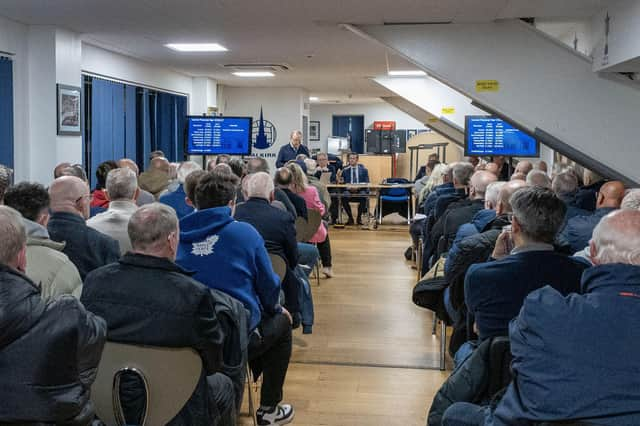
Speaking at Falkirk’s annual general meeting, director Tom Angus outlined what he said was a “phenomenal” performance across the business.

He said: “Sponsorship, hospitality and advertising increased by 68 per cent from just over 700,000 to £1.19m. As part of that, we are grateful to Scott Henderson and Crunchy Carrots whose four-year front of sponsorship concluded last year.
“And we welcome to McEwan Fraser Legal as our new front of shirt sponsor and we thank them for their significant multi-year commitment.
“A huge thanks goes to everyone who donated including the members of the Falkirk Supporters Society who contributed £147,000 in the year. To Sandy Alexander for his generous contributions to the academy budget and to the Bairns Business Club for their steadfast support over many years.
“Cost of sales, as you'd expect in the Premiership, direct costs rose significantly from £3.1m to £5.9m. The key element, as you’d expect was direct wages, essentially the football department.
“The pre depreciation trading profit of 1.75m, which is quite incredible up from £715,000 and total trading profit of £1.5m up from £606,000.
“Just for clarity, these results don't include any income in relation to the transfers of Calvin Miller and Barney Stewart, both of which fell into 2026-27.”
A note in the consolidated accounts confirmed that the perspective post balance sheet net receipts from those transactions sits at just over £1.4m.
Angus continued: “It’s also important to understand that profit isn’t the club’s main objective. We clearly had an eye on the looming requirements to replace the pitch and deliver training facilities. So the profit has been hugely important in that regard.
“Looking at the current financial year budget and to date, season two in the Premiership, just as promotion to the top flight brought with it significant challenges, staying there does likewise.
“We may be of a similar size to the other clubs. But they are either long-established Premiership clubs who have benefited from years of higher distributions, solidarity payments and multi-million pound Covid-19 support loans, and or are supported by wealthy proprietors.
“So in budgeting, we have to continue to budget to broadly break even. There's no banker of last resort. Turnover is budgeted to fall to £7.28 m, again assuming a 10th place finish. It's clearly too early to make assumptions regarding final league position, but we've again shown that we can compete.
“A trading loss of 418,000 is budgeted. We've consciously made available the bulk of the Calvin Miller transfer proceeds to specifically cover the additional, that additional investment in the playing squad.
“We remain committed to doing all that we can to be financially competitive without betting the farm. The board will never intentionally gamble with the financial survival of the club. Therefore, we have to continue to budget to maintain a modest cash reserve.
Falkirk are engaging with three potential investors
“As previously, the board's philosophy regarding capital raising is to seek investment to support development rather than to cover operating losses. This is very much the view we have also encountered from potential investors.
“Most recently, we've been speaking to three prospective minority investors, including one with a Falkirk connection in the US, but there's no deal on the short term horizon.
“Any investment that we would be prepared to put to the shareholders needs to meet our valuation of the club and it must be the right investor. Someone whose credentials are undoubted and who can assist us in the sporting or commercial development of the club and or development of infrastructure.”
Angus also confirmed that the Bairns are in discussions with Falkirk Council regarding around £600,000 worth of repairs and enhancements to the Falkirk Stadium’s main stand. The club would need to stump up a proportion of those costs.
The four resolutions put to shareholders - including to elect ex-FSS representative Angus as a director after he was co-opted by the board in March - passed with complete support from the members.
Those also included the regular annual general meeting business of receiving the company’s financial statements, appointing the auditors (Robb Ferguson) and authorising the directors to agree the remuneration of said auditors.