
'Rare' records show Bonnybridge widow denied pension after husband severely injured in First World War
A collection of First World War pensions appeal records have gone online for the first time, and one details how a local widow was denied a pension.
A Bonnybridge woman who was widowed after her husband died from war-related injuries was denied her widow’s pension, newly digitised records show.

Annie Martin’s husband, George Martin, was a father of two and a moulder in an iron works from Bonnybridge who joined the army in September 1914.
Four years later, at just 28 years old, George died and Annie was denied a widow’s pension.
George was seriously injured in 1915 at Ypres in Belgium after a bullet struck the sight on a rifle, causing shattered glass fragments to embed themselves in his head. He lost sight in his left eye and lived with nausea, vomiting, and unrelenting headaches.
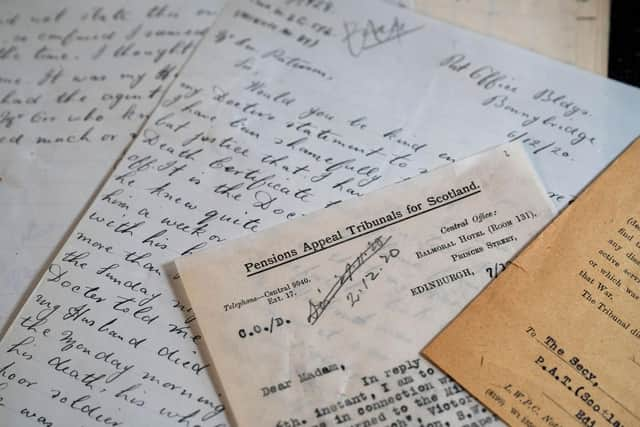
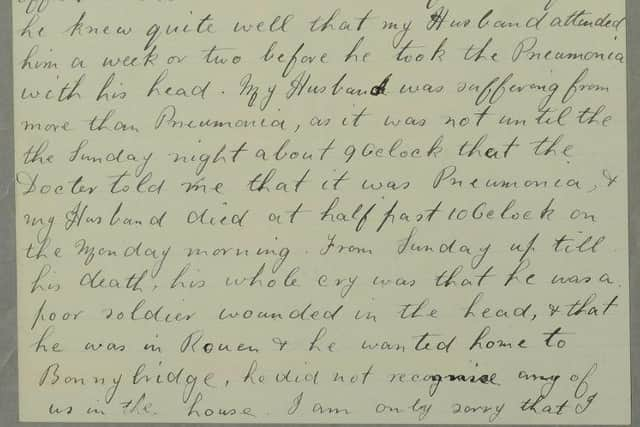
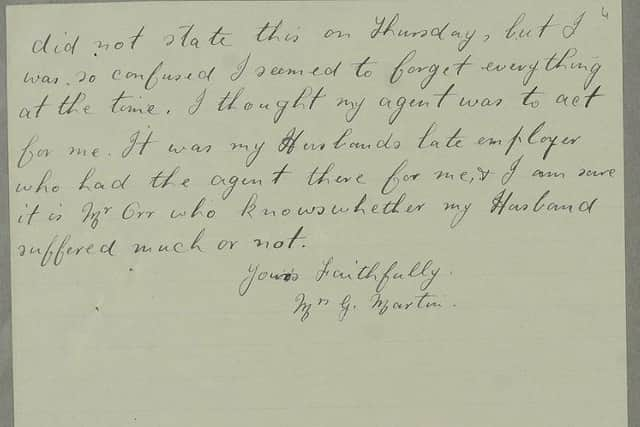
Her case file from the Pensions Appeal Tribunals for Scotland revealed first hand testimony from Annie.
“When [the] government raised the cry that England was in danger, and made the call for soldiers, my husband, with my consent, enlisted. We both had implicit faith and confidence in the promises made to the soldiers by the government.
“He never knew what it was to have a day’s perfect health since his discharge, he never was without pain.”
After his return from war, George had to take a lower paying job as a travelling salesperson to provide for his growing family. In 1918, the pair had three children – Elizabeth, aged seven, James, aged five, and new baby Marion. George’s income was supplemented by a small war injury pension.
The ex-soldier would regularly see army and civilian doctors, and in July 1918 his local GP extracted a piece of metal half an inch long from his head.
Later that same year, George caught the flu and developed pneumonia. He died from his illness at home in Bonnybridge.
Upon seeking a widow’s pension, Annie found herself faced with rejection. The widow was left with nine shillings and seven pence per week, which was a steep decrease from the £2 to £3 a week George had earned before the war.
She appealed the decision, telling officials: “I have had to put my three children on the Parish and it is a heart break to me to think that they are being brought up paupers after their Daddy doing his bit for his King and country.”
George’s doctor also wrote to the tribunal and stated the injury made George “more susceptible to the acute influenza and pneumonia” and it also “militated against any chance of recovery”.
Once the appeal failed, Annie wrote to the tribunal. She said: “I feel I have been shamefully treated. It is anything but justice that I have got.”
Records similar to Annie’s can now be found online via the Scotland’s People website, a site which offers access to records from the National Records of Scotland (NRS).
Of these reports, around 255 are linked to people who once lived in the Falkirk area.
Archivist Lynn Bruce said: “These case papers offer medical notes, war service details and list the men's work before and after the war. They're a mine of stories and information.
“Some cases also include powerful first hand statements from the men who served, and from family members or supporters. It’s a rare opportunity to hear the voices of people whose lives don’t often make it into the archive.
“Putting these records on Scotland’s People opens up access.”