
Old Bonnybridge, new book - Iron foundings, Roman origins and radical revolution
Old Bonnybridge is both the subject and title of a new book by popular author Guthrie Hutton, who grew up in Clackmannanshire and drew on years of research for his latest non-fiction work.
Brought up in Dollar, Guthrie emigrated to Australia aged 10. He returned as an adult, lived in various parts of Scotland, and is now settled in St Andrews.
The prolific author and historian’s new release, Old Bonnybridge, explores the history of the area and how it evolved from a rural crossing into a major industrial hub with connections reaching across the world.
He said: “My familiarity with Bonnybridge comes through the Forth and Clyde Canal. When I moved back from Australia, I would walk right up the canal. It was one of my favourite routes.”
He added: “I’m also interested in its past industry, the history of the canal, and the iron and brick foundries that tie Bonnybridge’s history together.”
Aimed at anyone who enjoys nostalgia or Scottish history, or who has spent time in Bonnybridge, the book combines historical images with new writing from the author.
He said: “I’ve researched the area for years. It’s an accumulation of about 50 years of knowledge. What I found surprising was just how much of a strategic location Bonnybridge was, and there’s even a wee joke in the intro about how it’s now a central highway for UFOs.”
From a tiny village, Bonnybridge grew in the late 18th and 19th centuries into a major industrial centre, with a reputation that travelled across the world. It’s unique because, despite being a small area, it had enormous resources and strategic transport links to the rest of the country.
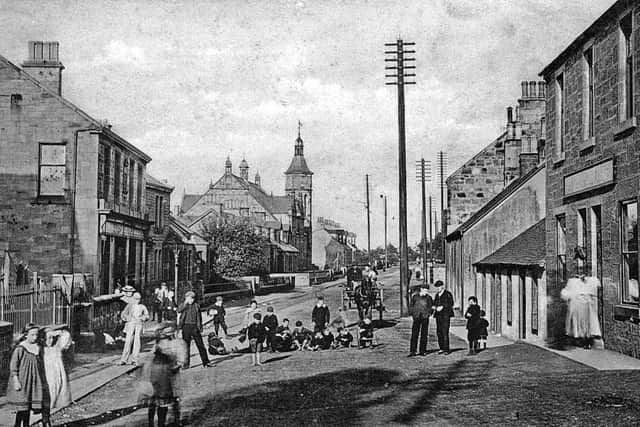

The respected author said: “The very shape of the Bonny Water made it an ideal river to be adapted for mills, so there were a number of them either side of Bonny Bridge. Then the iron founding really built it up. Even the canals themselves were the earliest form of industry that existed in the area.”
Industrial ironworks, Bonnybridge Foundry, once manufactured as many as 6000 sewing machine bodies a week. It was also the first to introduce American-style metal heating stoves to Europe, and even supplied one to Florence Nightingale.
Guthrie said of the village’s legacy: “There’s the history of the Radical Weavers, Government spies, and the people involved who were captured and hanged or sent to Australia.”
The author of dozens of books, including history titles including, Old Falkirk, Old Larbert and Stenhousemuir, and Mining from Kirkintilloch to Clackmannan and Stirling, Guthrie’s latest work captures a taste of the area’s history.
Guthrie said: “The outlet for stove making was based in Bonnybridge, with Glasgow serving as a world hub. A lot of the iron founding products were sent down the canal to Glasgow, and as the city grew and tenements were built, the kitchen ranges installed in them were made of iron from the village.
Bringing together historical images and writing from the acclaimed historian, the book also traces Bonnybridge’s journey from Roman origins, including the Antonine Wall, to the rise and fall of an industry that touched the world.