
Construction work begins on Centre of Excellence for Canals and Traditional Skills at site of former Irn-Bru factory
Construction work has begun on what will become Scotland’s first centre of excellence for canals and traditional skills at the site of a former Irn-Bru factory.
The full business case for Lock 16: Scotland’s Centre of Excellence for Canals and Traditional Skills in Camelon has now been endorsed by the UK and Scottish governments and approved by Falkirk Council’s executive committee.
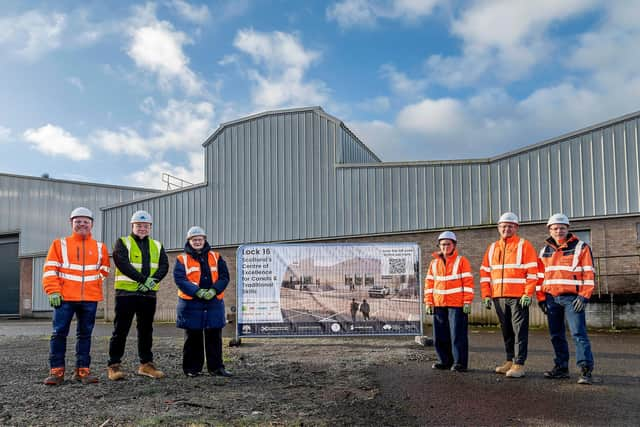

The project has become the second project within the £100 million Falkirk and Grangemouth Growth Deal, which will support the area’s transition to net zero and future skills requirements, to gain approval.
The project, spearheaded by Scottish Canals in partnership with Historic Environment Scotland (HES), will provide the largest single space in Scotland dedicated to the development and delivery of high-quality traditional and heritage skills training.
The canal custodians will focus on developing pathways into heritage skills training, volunteering and employment within the historic environment sector and the centre will look to address some of the growing challenges of sustaining Scotland’s historic environment by supporting the development of specialist skills critical for its future.
The project’s business case requests funding of £4 million from the Scottish Government to support the development of the centre of excellence at the former AG Barr site on the Forth and Clyde Canal.
Richard Millar, Scottish Canals’ chief operating officer, said it was “an exciting new project” and a “significant milestone” for the centre of excellence.
He said: "The project has only been made possible through support of our funding partners and we look forward to working with local communities as construction gets underway to ensure the centre delivers lasting benefits.
"The centre will play a vital role in protecting heritage skills, supporting training and apprenticeships and investing in the future of our canal network.
“From concept to commitment this marks the beginning of a new chapter for the former AG Barr Factory and for the industries and people of Falkirk and Grangemouth.”
Dr David Mitchell, director of cultural assets at Historic Environment Scotland, said he was pleased to see “another key step” in the journey, adding: "The centre will provide a key opportunity to further champion and place a spotlight on skills and crucially open up new pathways for sharing expertise and innovation across sectors.”
Councillor Cecil Meiklejohn, Leader of Falkirk Council, said: "Projects like this show how investment can translate into real, everyday benefits - from bringing a long-standing vacant site back into productive use to supporting jobs and skills locally.
"It’s a practical example of how the Falkirk and Grangemouth Growth Deal is helping to regenerate places and strengthen the local economy over the long term.
"It's great that work has started on site, as people can now begin to see that investment taking shape."
Lock 16 - Scotland's Centre of Excellence for Canals & Traditional Skills is funded by the Falkirk and Grangemouth Growth Deal, National Lottery Heritage Fund, Regeneration Capital Grant Fund (RCGF), Scottish Canals and Historic Environment Scotland.
Construction work at Lock 16 will be carried out by main contractor Robertson Construction Central East, following on from its previous works at the site on the roof and walls, and is expected to last until the February 2027.
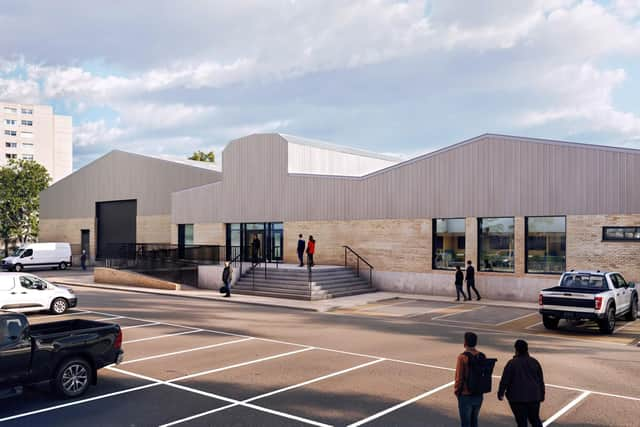
Works include a new main entrance as well as training classrooms and offices which will be housed in a specialised standalone structure within the existing building. The main space will also be subdivided to provide workshop areas. Externally, the project includes the demolition of outbuildings, landscaping, and a new car park with EV charging infrastructure.
David Cairns, regional managing director of Robertson Construction Central East, said: “As the partner of choice for Lock 16, we are proud to be delivering a project that will encourage and train people in heritage skills that can be used within the built environment.
“The construction sector has advanced greatly but it is essential that these skills are still taught in order that Scotland’s important historic sites can continue to be enjoyed for generations to come, and new buildings have the potential to benefit from heritage crafts.”