
Case of avian flu has been confirmed in a swan at Linlithgow Loch
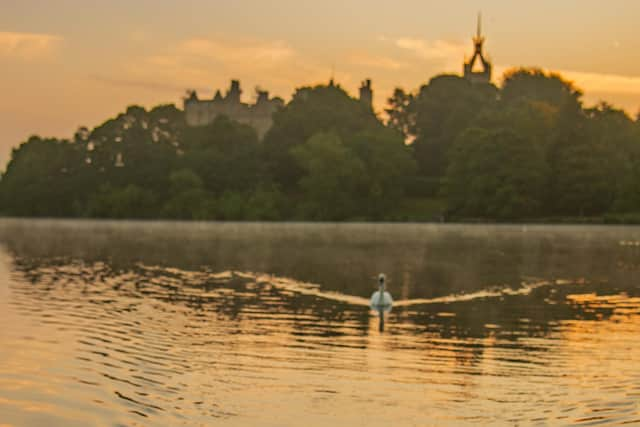
Warning signs have been placed around Linlithgow Loch, following a confirmed case of avian flu in a swan.
The Animal Plant Health Agency (APHA) alerted West Lothian Council on Wednesday.
And Historic Environment Scotland, which owns the loch, moved quickly to place warning signage around the site.
The council's Trading Standards team has issued a reminder to leave any dead, wild bird in situ and not to touch or pick it up, unless it is absolutely necessary.

A spokesman said: “If you find a dead bird of prey, three or more gulls or wildfowl species – particularly wild geese, wild ducks and swans – or find five or more birds of any other species in the same location and at the same time, please report these incidents to Defra's national helpline on 03459 335577. You should not touch or handle the dead birds.
“The risk to humans remains low but people should still take precautions.”
Readers are being advised to stay on footpaths; keep their dogs on leads; not to feed waterfowl; not to pick up or touch sick or dead wild birds and not to touch wild bird feathers or surfaces contaminated with wild bird droppings.
Dead birds on private land are the responsibility of the land owner.
Any birds found on public land can be reported to the council at www.westlothian.gov.uk/article/32530/Report-a-Dead-Animal.
While the council will deal with dead birds on public land, those found on private land are the responsibility of the land owner.
Guidance has been issued by APHA and the Scottish Government on what to do if dead birds are found at www.gov.uk/guidance/avian-influenza-bird-flu.
Bird keepers are also being instructed to follow strict measures to help protect their flocks from the threat of avian flu.
An Avian Influenza Prevention Zone (AIPZ) with mandatory biosecurity measures is now in place in both Scotland and England.
The AIPZ means bird keepers must keep free ranging birds within fenced areas; ponds, watercourses and permanent standing water must be fenced off.
Owners should cleanse and disinfect footwear and keep areas where birds live clean and tidy, while also minimising movement in and out of bird enclosures.
To reduce any existing contamination, concrete areas should be cleansed and disinfected.
Domestic ducks and geese should be kept separate from other poultry and owners should feed and water all their birds in enclosed areas to discourage wild birds. Using netting ponds will help to make the enclosure unattractive to wild flocks.
Poultry and poultry products, including eggs, are safe to eat as long as they are properly cooked.