
New report highlights concern over staff shortages and violence at Polmont YOI
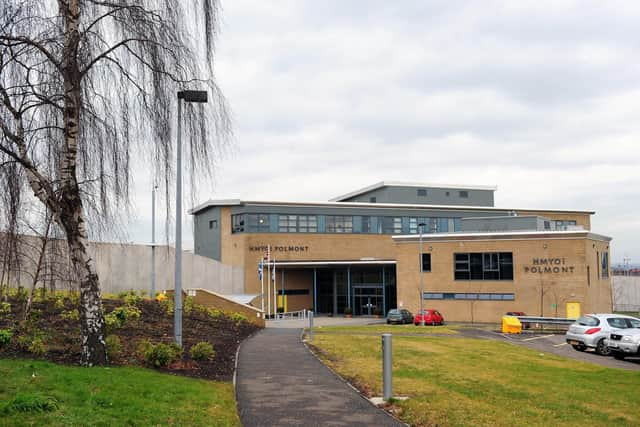
Polmont Young Offenders Institution was said to be in breach of “human rights” in a new report published by Independent Prison Monitors (IPMs).
The annual monitoring report, published on Wednesday, October 21, sets out the findings of the IPMs at HMP and YOI Polmont over the reporting year.
Overall, the assessment, which is based on regular monitoring visits and engagement with prisoners, staff, and managers, found the YOI to be a “stable” over the year.
However, IPMs noted ongoing questions regarding the appropriateness of the current “population model” at Polmont and, when it came to the wider issue of safety, they had concerns about the effect on the young people of housing them all on one houseblock, where elevated levels of violence noted in last year’s report remain.

This year’s report stated: “The repeated use of single cells in Blair House to accommodate two prisoners remained a concern. Sharing too small cells limited
personal space and privacy and puts pressure on the services and activities available.
"This concern was raised in last year’s IPM report and remains unresolved, with pressures expected to continue. The IPM team is clear housing people in cramped
conditions is a breach of their human rights and continues to require urgent attention at a national level."
IPMs were saddened by the death in custody which occurred during the reporting year and extend their sympathies to the family, inmates and staff affected.
Inspectors noted “physical adaptations” to “reduce ligature risks” were observed at the facility, such as modified shower doors and the introduction of safer cell features, and staff engagement following “serious incidents” was described as “supportive”.
The issue of violence reared its ugly head – particularly in one location in the YOI.
“Violence between young people remained a concern, particularly in Monro Hall itself, where the majority of incidents were concentrated. While serious incidents were relatively limited in number, there continued to be a high volume of lower-level assaults and fights, indicating persistent challenges in managing conflict within this population.
“Data provided by the prison shows that incidents were most frequently recorded in Monro residential areas and associated exercise spaces, with motivations often
linked to interpersonal conflict, retaliation, and external factors.
"The concentration of young men within a single hall, alongside constraints in separating those identified as incompatible, limited the establishment’s ability to manage risk effectively.”
Staffing issues were said to continue to be a problem.
"The current staff roster and absence allowance used in all SPS establishments does not provide sufficient resilience,” the report stated. “It under-estimates the
numbers of staff on sickness absence leave and offers no allowance for maternity cover.
"Even if fully staffed, IPMs are of the opinion the staffing profile is not sufficient to deliver the regime and provide the support required for the population held.”
Dental waiting times were described as particularly long, with remand prisoners unable to access routine dental treatment even after extended periods in custody.
Mental health needs within the population were also reported to be increasing, with both staff and prisoners describing challenges associated with managing complex mental health issues within the prison environment.
Some prisoners had positive comments to make when it came to food provision in the YOI and IPMs observed kitchens to be clean and well organised.
However, persistent concerns were raised regarding “early mealtimes”, “food temperature” and “portion sizes”.
The report stated: “Despite Polmont receiving a larger catering budget than most other prisons, it remained the case that IPMs do not believe that budget is sufficient.
"Things improved significantly towards the latter half of the year, and the new catering manager showed a willingness to listen to both IPM and prisoner concerns and take action to rectify issues raised.”
The ongoing problem of how to educate and fill an inmates days in custody with some purpose was also looked at once again.
"Where prisoners were able to access them, purposeful activities at Polmont were consistently described positively. IPMs observed a broad range of educational, vocational, creative, and therapeutic activities, including life skills courses, gym provision, creative arts and specialist programmes such as Paws for Progress. “
"Activity staff were enthusiastic, knowledgeable, and supportive. However, access to purposeful activity was uneven across the year. Staffing pressures, population management demands, and regime curtailments resulted in some workshops being closed during visits.
"IPMs observed whole activity areas not operating at times, leaving prisoners locked in cells or confined to limited association.”
It was not all bad news for Polmont YOI – across the year, IPMs noted many examples of staff expertise and care shown to prisoners, engaging positively with new
admissions, providing information clearly and responding to questions.
Staff relationships with prisoners were observed to be “constructive and respectful”.
A Scottish Prison Service spokesperson said: “We value the important scrutiny provided by the Independent Prison Monitors, and the publication of these reports
which recognise the professionalism and commitment of staff at HMP & YOI Polmont, the positive relationships they have built with those in custody, and the support
available to help young people engage in education, personal development and rehabilitation.
“Like prisons across Scotland, HMP and YOI Polmont continues to experience the effects of sustained population pressures and increasingly complex needs. As we
have previously made clear, we need to see a long-term reduction in the prison population so that staff can fully support those in our care, reduce the risk of
reoffending, and help build the safer communities we all want to see.”