
Looking back with Ian Scott at the important role of Kinneil House in Scottish history
Like most local history enthusiasts I was delighted to hear that Historic Environment Scotland was taking over the running of the museum at Kinneil and thus saving it from almost certain closure. It is a very satisfactory solution to a long running problem since the HES already look after the historic Kinneil House and run regular open days.
All praise to the Friends of Kinneil whose hard work and determination has saved the museum for the local community. We are all in their debt because it is a marvelous place to learn about the rich history of the house, the estate and Bo’ness.
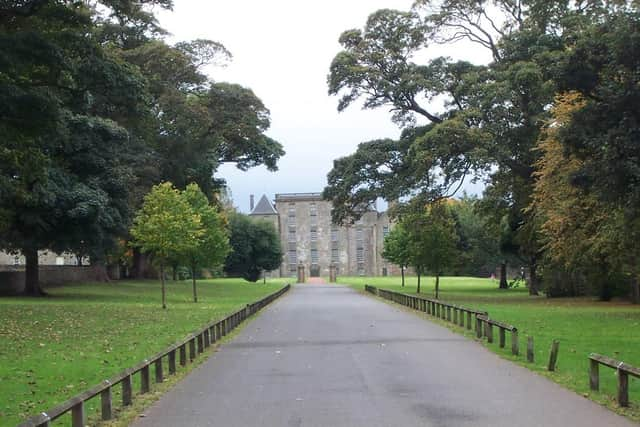
I first fell in love with the place when I caught a glimpse of the building at the end of that long avenue, set among trees and magnificent parklands. And what a great history is there. From the Antonine Wall which crosses the estate to the little workshop where James Watt perfected his steam engine it is all here, near the house where for more than six centuries the Hamiltons held sway. Of course they were no ordinary family. Gifted the lands by Robert the Bruce in the years following Bannockburn in 1314 they rose to real importance in 1473 when the then Lord Hamilton married the King’s sister. Thereafter their descendants were just a heartbeat away from the throne and when Mary Queen of Scots succeeded her father in 1542 as a baby it was her cousin James Hamilton, the 2nd Earl of Arran, who became Regent in her place. For the next 11 years he ruled Scotland and, since Kinneil was handy for Edinburgh, it is fair to say that the house was one of the main power centres in the Kingdom.
At the time the house was a typical Scottish fortified tower, which is still there at the centre of the surviving building. Lord James thought it a bit cramped and old fashioned and not suitable for his new status so he added a new wing which was referred to as "the palice”. This stands to the north of the tower and the two were later joined together by the pavilion with its little pyramid roof. Inside, the rooms were decorated with magnificent religious mural paintings which are regarded as the finest examples of their kind in Scotland.

Was the Earl happy in his lovely new palace ruling over the Kingdom? These were certainly tough times with warring factions always struggling for power against a background of religious ferment so it was certainly a job with drawbacks. And it seems that he had an even more burning ambition. He wanted to be a duke and since there were no dukedoms in Scotland at the time his chances seemed slim. Enter the formidable Mary of Guise, French mother of Mary Queen of Scots. With the baby queen safe in France, Mammy thought that a French Royal marriage would be a good idea. To encourage James to help bring this about she offered a bribe. He could be the Duke of Chatelherault and, if young Mary died without an heir, he would be her nominated successor. James grabbed the chance and a few years later handed over the Regency to the Queen Mother. Despite this early retirement he did continue to play a big part in the turbulent politics of Scotland and Kinneil House remained a key centre in what was one of the most important and interesting periods in Scotland’s history.