
Looking back with Ian Scott on Falkirk's great Infirmary campaign 1925
Local historians like nothing better than anniversaries and 2025 brings the centenary of the greatest fund raising campaign in our history.
The spring of 1925 brought the launch of the great infirmary appeal which united the whole community and dominated the life of the town for the next five years. The Infirmary in Thornhill Road opened in 1898 was bursting at the seams and demand for care was rising rapidly. Most of the money to operate it came from donations and subscription and was barely enough to keep the service running. If Falkirk was to have a new hospital a massive community effort was required.
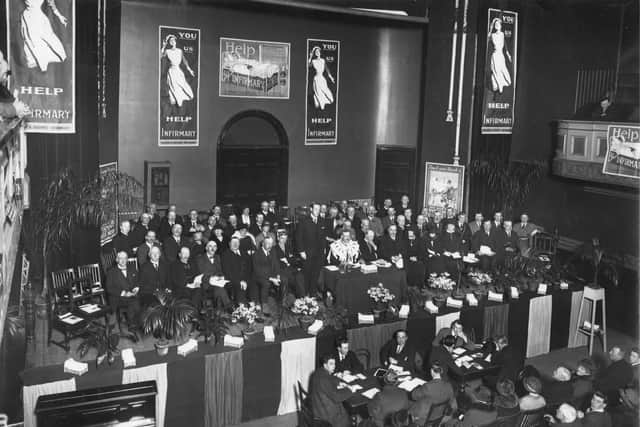

In 1923 the Hospital Board announced that they had raised £17,000 and that they had purchased the estate of Gartcows and appointed William Gibson, the son of Harriet Gibson the founder of the original Cottage Hospital as architect. On April 27, 1925 over 1000 people filled the Town Hall to hear the Marquess of Linlithgow launch the campaign. There were speeches from local dignitaries and many promises of support.
There followed an astonishing five year spell in which every method of fund-raising was employed, and hardly an organisation or individual failed to participate. If they attended a play or pantomime, part of the receipts went to the fund. The same applied to football matches and dances, school concerts and bus trips, picnics and whist drives. There were collecting boxes everywhere – outside hospital wards, in public buildings, in private houses, in shops and business premises.
A glance through the Herald reveals a frenzy of fund-raising activity. One might for example, enjoy ‘The Merchant of Venice’ at the Dobbie Hall, ‘Floradora’ in the Grand Theatre, or ‘She Stoops to Conquer’ in the Town Hall. There was a ‘Fancy Fair’ and ‘six penny bazaar’ in the YMCA hut, ‘Mr Martin's Orchestra Dance’ in the Gymnasium, Camelon, ‘Music in the Garden’ at Arnothill, a ‘Vocal Recital’ in the Masonic Temple and a ‘Palais de Danse’ in the Temperance Cafe. For sporting types there were football, cricket and tennis competitions as well as the chance to see a ‘Great Boxing Gala in Jim Paterson's new and commodious Pavilion’ to see ‘a four round contest between Spowart's midgets’ along with Falkirk's own ‘Fatty Wells, Young Connell and Butcher Anderson’.
There were road races, grand penny trails, watch-winding competitions, highland gatherings, popular lectures, community singing, open days at mansion houses, jumble sales and silver paper collections. The list was endless. A small book was produced entitled ‘Seventy Three Ways in Which You Can Help Your Infirmary’ and it included as number 32: ‘Strap onto your dog a collecting box and teach him to make collections – but not in public thoroughfares without a special permit.’
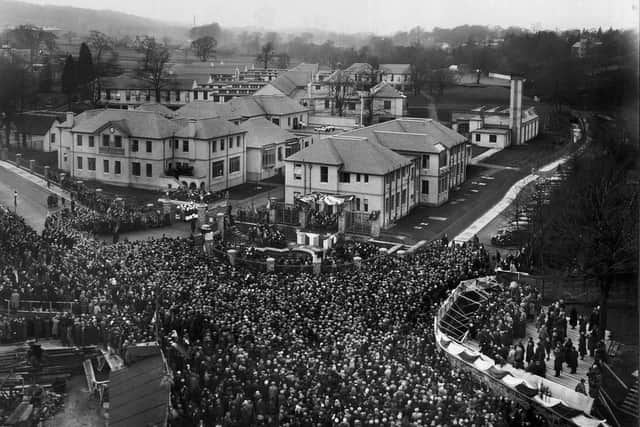
By the time the Duchess of Montrose cut the first sod of earth at Gartcows in November 1926 the fund had reached £90,000. The modern building provided for 120 beds paid for by the community and a Maternity Ward funded by the Government. By 1930 the building was ready for inspection and nearly 8000 visitors did just that. The patients moved in at the beginning of 1931 and a year later Prince George declared the building open in front of 20,000 people naming it ‘Falkirk and District Royal Infirmary’. It had cost £120,000 – nearly £3 million by today's standards – and was opened free of debt.
It was our forefathers’ gift to us and we should remember it with gratitude and pride.