
Looking back with Ian Scott on Falkirk men's fighting history in the Napoleonic and Boer Wars
Over the last decade or so we have been marking the sacrifices made by local soldiers in the Great War and World War 2. But Falkirk’s contribution to the defence of the realm did not begin with the rush to the colours in August 1914.
When Britain went to war against Napoleon and later to fight the Boers in South Africa, the ‘bairns’ were there playing their part in victory and defeat.

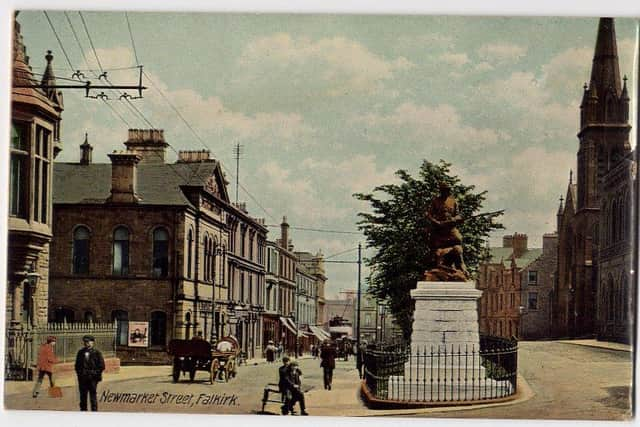
For the famous ‘Falkirk dizzen’ – there were actually 13 - it was triumph at Waterloo in the cavalry of the Iron Duke whose statue stands in Newmarket Street. In civilian life they had been shoemakers, bakers, weavers and joiners but having enlisted in the Scots Greys they survived the heat of battle and lived to bask in the glory that came their way in the years after 1815.
Another famous Falkirk man who saw service in Wellington’s army was the remarkable James ‘Persia’ Dawson who served his time at Carron and then joined the Royal Artillery in 1806 and fought in Holland. He was so successful that he was sent as a gunnery instructor to train the Persian army and later, on discharge, went back to help manufacture cannons for the Shah. Well rewarded for his efforts he returned to Falkirk where he built a range of houses in Bainsford called ‘Persia Row’ before leaving for South Australia where he became a highly successful landowner.
His amazing story is told by one of his Australian descendants, John Mathews, in an earlier edition of the local history society journal Calatria, number 29 back in 2013.
Another article in the same edition by Allan Ronald describes how an astonishing number of men from Falkirk district took part in the second Boer War (1899-1902).
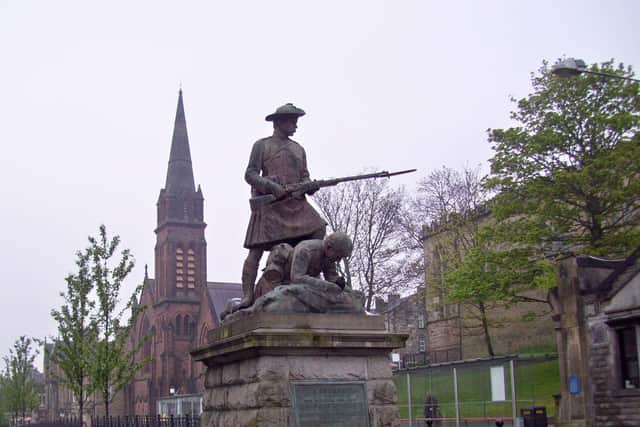
Although I am familiar with the South African memorial in Newmarket Street with its 38 names I had really no idea of the extent of local involvement until I read what Allan has turned up from letters, memoirs and back numbers of the Herald.
Most of the men who were sent to face the Boers were reservists who had served in the army and were on stand-by if required. They were called up in their hundreds and such was the enthusiasm for the ‘cause’ that the community rallied round to provide for the welfare of the families left behind.
The newspapers were soon full of reports of casualties at Modder River and Spion Kop and the death notices and sight of wounded men provoked a further outpouring of sympathy. The Herald launched a War Fund and money poured in from employers and individuals along with useful items like sweaters, shoelaces, buttonhooks, meat lozenges, cholera belts, indelible pencils and wire nippers! By the end of 1900 there were so many local men involved that the papers were using the phrase ‘Fighting Falkirk’.
But there was a darker side to the story. Many of the men in their letters home were critical of their commanders and complained of lack of food and military incompetence. “There was a wild spirit of mutiny among the men” wrote one Corporal. Altogether it is a fascinating read and I’m sure it would be a bit of an eye-opener to many who pass the memorial every day without a thought for what exactly took place so many miles from home.
Calatria 29, is available from Falkirk Libraries or from the Local History Society (01324 627692) via [email protected]