
Looking back with Ian Scott on a new power in Falkirk
Last Sunday I had the pleasure of seeing an excellent documentary film in the new Polmont Community Hub (formerly the Greenpark Centre) which is now run by and for the local community.
Thanks to Kenny and Claire for all their hard work and hospitality. The film presented by Friends of the Earth was all about the growing trend for local people to group together and create what they call ‘Power Stations’ consisting of individual streets of solar panels.
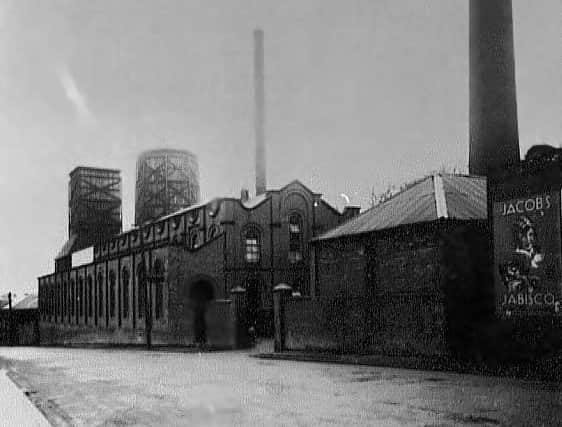

It may well be the way ahead and in a funny way it is an echo of the situation of a century ago when towns which wanted a supply of the new power had to generate it in their own area.
In 1896 for example the Town Hall, Masonic Lodge and Free Church in Newmarket Street were illuminated for the three days of a great fundraising bazaar and the crowds flocked in to admire the modern wonder. This was thanks to a couple of entrepreneurs with their own generators.
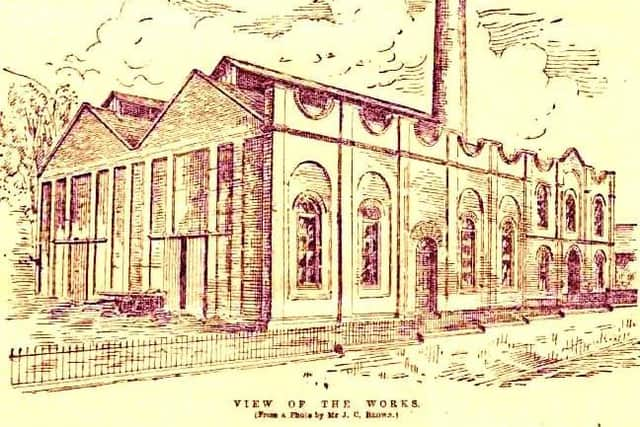
The fear that such private individual might apply for a licence to supply the area led the Council in 1900 to secure its own approval and the Burgh Engineer David Ronald was given the task of designing a suitable system using coal from the local area of which there was an abundance.
The site on High Station Road, which then housed the Burgh Stables, was chosen and construction work started in the summer of 1902. Soon the familiar red brick building with its 120 foot chimney appeared and the complex and expensive equipment – boilers, dynamos and the like – began arriving in the town.
Three main feeder cables were laid to carry a 460 volt supply to the High Street, Newmarket Street and Grahamston from where power was laid to the first 40 subscribers’ homes and shops as well as 35 lamp-posts.
By the spring of 1903 all was in place for the great switch on.
The whole thing had cost £21,000, several millions by today’s measure, and a huge gathering of the great and the good filled the building to watch Mrs Fairlie, wife of the Convenor of the Electric Light Committee, who “in a very graceful manner switched on the current amid loud applause and immediately the building was brilliantly lit up with festoons of vari-coloured lights which were suspended throughout the engine room”.
Outside on the streets those ratepayers not invited to the party joined in the fun as the street lamps burst into life and the Town Hall, to which the guests now retired for the usual bun-fight, was itself “brilliantly lit with the new illuminant”.
From then on growth was rapid. By 1912 there were 74 lamps and 467 subscribers for lighting, 63 of whom were also supplied with power.
Through two wars the power station kept the wheels of Falkirk’s industry turning and lit and heated the homes of a growing population. But the days of town enterprises were drawing to a close and 1947 brought nationalisation of electricity generation and distribution.
By then the Falkirk output was 70 times what it had been in 1914.
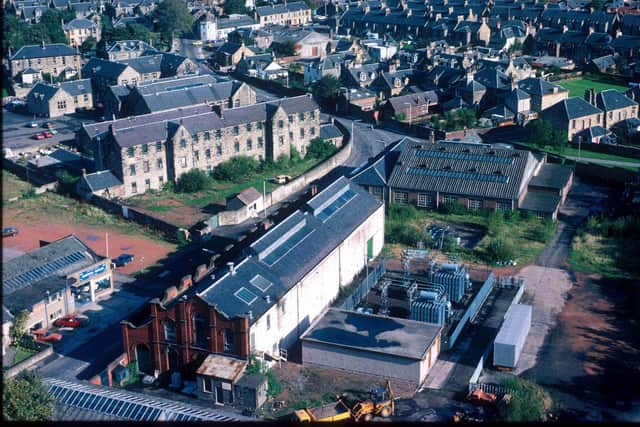
Sometime in the1950s the High Station Road station was reduced to a service centre and the building was eventually demolished. The site is now home to the new Salvation Army centre and only part of the outside red brick wall remains as a reminder of what was once the powerhouse of the community.