
Falkirk councillors reject final plea for status quo over care provision at Tygetshaugh Court
Falkirk councillors have rejected a final plea to ask for a controversial decision to change care provision at a local sheltered housing complex to be overturned.
At Falkirk Council’s final meeting of the year, Councillor Brian McCabe urged members to back his bid to ask the Integration Joint Board (IJB) – the body that oversees health and social care locally – to reverse its decision to reprovision care at Tygetshaugh Court in Dunipace.
The decision means that permanent staff based at Tygetshaugh Housing With Care complex will be replaced with care packages that will be agreed separately with residents.
While the cost-cutting change was made by the IJB – not by councillors – Councillor McCabe argued that it would have a negative impact on Falkirk Council’s finances as well as its reputation.
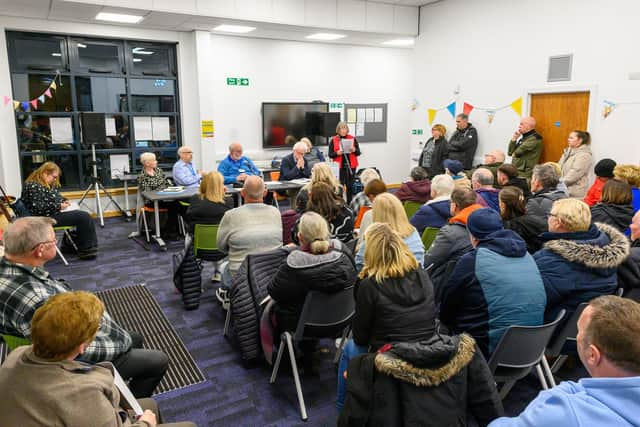

Mr McCabe, who has previously spoken emotionally about the time his own mother spent in the complex, said Tygetshaugh is currently providing “a fantastic, gold standard” service that should be replicated elsewhere.
In particular, he highlighted how staff were able to help residents attend social functions in their communal lounge and warned that similar changes were being made in other care facilities.
He also criticised the fact that no tenants had been involved in a district-wide consultation about Health and Social Care Services in Falkirk.
“I’m not asking – I’m pleading – please don’t do this to our elderly residents,” he said.
Councillors, however, were not persuaded that the decision should be revisited given the huge financial pressures that the IJB is facing.
Labour councillor Anne Hannah said: “I think we have to be very, very clear about what the changes are that were agreed by the IJB.
“It doesn’t remove care from anybody, it doesn’t increase costs for anybody of the care that is provided for them and it doesn’t close any facilities or ask anybody to move.
“What it does is provide residents with a choice of care provider under the current legislation.”
She highlighted the continuing rise in the elderly population along with a £1 billion reduction in funding nationally.
“I cannot in all conscience support the idea that people in one part of the Falkirk Council area are being provided with services that are not part of the care requirement while others are stuck in hospital, unable to go back home because there is inadequate care available,” she said.
SNP group leader Councillor Cecil Meiklejohn agreed that she could not support a situation that would see disparity between different parts of the district.
“Our care system has to modernise, it has to innovate, it has to change in order to increase its capacity going forward and tests of change such as this are welcome to enable the resources to be distributed to those in greatest need,” she said.
Baillie James Kerr, Conservative group leader, said that he did not think asking the IJB to change its decision would have any effect, although he recognised the strength of feeling among the residents and families affected and added: “It’s a very hard decision and I take my hat off to Councillor McCabe for bringing the motion forward.”
At the same meeting, Mr McCabe also put forward an amendment to a council report suggesting ways that communication has been and will be improved between the IJB and Falkirk Council.
This followed fierce criticism of the way the Tygetshaugh decision was communicated to residents and families, who have campaigned relentlessly against the changes, as well as to staff and local councillors.
Mr McCabe suggested further changes, including setting up a working group involving councillors, HSCP staff and trade unions that would meet once a month to discuss any proposals.
But chief officer Gail Woodcock told members that there were already regular meetings with trade unions and processes in place to involve people affected by changes.
She added that where staff might be affected by proposals, public engagement might not be appropriate.
But she stressed that lessons have been learned from the criticism and efforts are being made to their engagement process.
Ms Woodcock also pointed out that information about the proposals had been leaked on social media which meant they had to take a “reactive approach” to the news.
The IJB has also agreed that where proposals for service change impact on specific council services, “officers will ensure that local elected members are informed and have an opportunity to feedback on proposals that impact on Council services”.