
Challenges remain for Falkirk Council as budget for 2026/27 agreed
As Falkirk Council set its budget on Thursday, chief executive Kenneth Lawrie told members the council has “come a long way in the last five years” on its difficult journey towards financial sustainability.
For the first time in that period, reserves were not used for day to day spending and there was enough cash to give more support to social care and invest in community projects, such as a new team that will be recruited to tackle the blight of litter across the district.
The fact that the council has not used service concessions – reserves that have been freed up as a result of changes to how payments are made for PFI schools – also means that they could be used for capital projects.
This could include projects such as a theatre and town hall for Falkirk, new leisure facilities for Denny and the Braes and upgrading Grangemouth Leisure Complex and Camelon’s Mariner Centre, but the final decisions will be taken at a separate meeting on March 26.

Mr Lawrie told the meeting that a major factor in the brighter financial position has been ongoing efforts by council officers, who have cut spending by around £11 million in the past year.
These are operational savings which do not need to be approved by councillors but they have been absolutely crucial in recent years as the council has struggled with rising costs and increasing demand for services, without an increase in funding to match.
These savings, combined with last year’s council tax rise, were added to a better than anticipated settlement from the Scottish Government – effectively a two per cent rise, when no increase had been expected.
Over the previous year, councillors had also agreed to increase charges for bereavement services by 12.5 per cent, which will come into effect in April, while other fees and charges will also rise, including leisure charges, which are now decided by council officers.
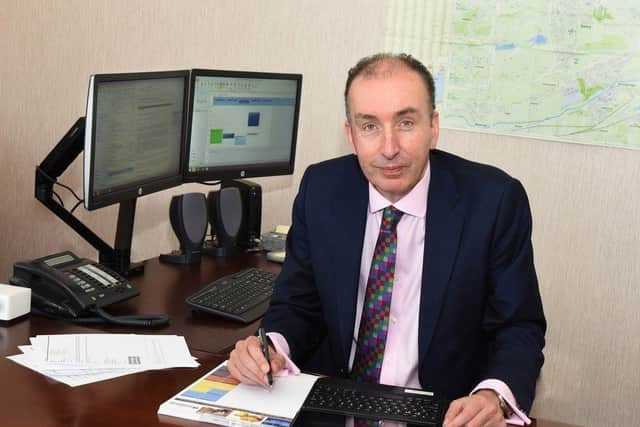
But the chief executive added that while the picture was more positive this year, there would continue to be challenges ahead and more difficult decisions for councillors.
Across Scotland, councils are facing similar difficulties and the umbrella organisation COSLA warned in January that “without urgent action councils will be unable to maintain essential services such as social care, education, housing support, roads, and community safety”.
Amanda Templeman, chief finance officer, told members that despite the ongoing work to cut costs and increase revenue, the council still faces a funding gap of nearly £22 million in next five years.
The work to cut costs continues and a joint project with Clackmannanshire Council will continue while it is now likely that Stirling Council will be involved in finding ways to share services in a bid to save money.
Residents of the Falkirk Council area will once again have a sizeable increase in council tax, with members agreeing to an 8.77 per cent increase – a rise of £2.66 a week for Band D households.
But councillors hope that residents will at least see some tangible improvements in the local area, with 2.5 per cent of the rise having been earmarked for borrowing that will be used to invest in things such as roads, buildings, schools and leisure centres.
Mr Lawrie said: “The council has come a long way in the past five years.
“It is clearly a more positive year for the council in terms of its budget – but there is still a lot to do and it is essential that we retain our commitment to the financial strategy.”
Speaking after the meeting, the leader of the council, Councillor Cecil Meiklejohn, said: “We know this continues to be a very challenging time for public finances.
“The cost of delivering essential services is rising and demand for support, particularly in areas such as social care and family services, remains high.
“This budget sets out a balanced and responsible financial plan.
“It protects the services that many residents rely on while allowing us to invest in the condition of our buildings, roads and public spaces and in the wellbeing of our communities.
“Falkirk has received one of the higher funding increases from the Scottish Government this year, which has helped put the Council in a stronger position than in previous years.
“By planning carefully and identifying savings through operational efficiencies, we have been able to avoid relying on one-off measures to balance the budget.
“The approach we have taken spreads the responsibility across savings, investment and council tax decisions. It means we can continue to support our most vulnerable residents while also investing in the places where people live.”