
Touching tribute: Camelon centre celebrates 200 years of Braille reading system
A local sensory charity helped celebrate 200 years since the introduction of Braille with a fun-filled and educational event to mark the bicentenary.
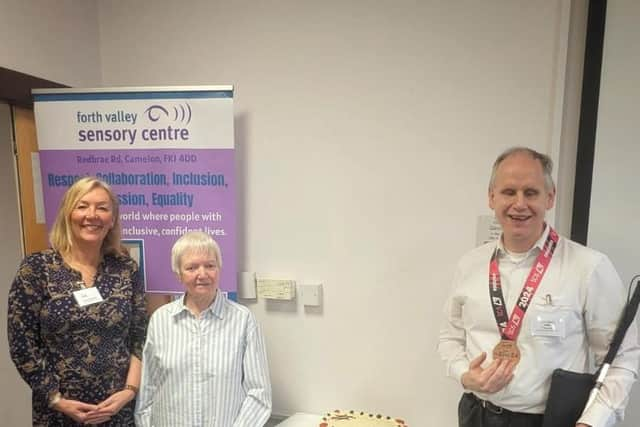
Forth Valley Sensory Centre (FVSC) hosted the event on Thursday, with people coming from across the Forth Valley to find out more about the impact and use of the system.
Braille was first introduced in 1824 and uses a tactile alphabet of raised dots as a tool for those who are blind or have sight loss to read.
Invented by Louis Braille in France, it had a revolutionary impact on blind people being able to read and participate in society.

During this week’s event there was a presentation on the creation of Braille, detailing its beginnings as “Moon”, a writing system that used embossed symbols derived from Latin, up until the system used today.
FVSC also unveiled a piece of new collaborative Braille artwork, a depiction of a tree and a leaf, to mark the anniversary and group participants also shared their personal journeys of learning Braille and the impact learning the method has had on them.
There was also a cake to enjoy, decorated in Braille, which was cut by FVSC’s Braille tutor Christine Moroney.
In collaboration with Forth Valley College, the centre has hosted Braille classes since 2006. These fully funded classes are held at the centre in Camelon every
Thursday during term time between 10am and 12pm and are open to anyone who would like to learn the Braille system.
Christine said: “Hosting the Braille 200 event was a great way for me and my Braille class students to showcase how important Braille is to us in many aspects of life.
Despite advances in technology, Braille remains an essential language for blind people and it will always be close to my heart.”
Jacquie Winning, FVSC chief executive, added: “We are delighted that we could celebrate such an important milestone for those who are blind and those with sight loss.
"Braille is a huge part of many of our centre users lives and we are pleased we were able to share its influence and celebrate its importance with extended members of our community.”