
Fewer women in Forth Valley attending for cervical cancer checks

Almost three in five women living in Forth Valley fail to attend for vital screening for cervical cancer within six months of being invited, new statistics reveal.
The numbers attending has dropped from around three-quarters (74.5 per cent) in 2016/17 to only 59 per cent last year, official data shows.
Attendance had been stable until 2020/21 when it decreased to 70.8 per cent – although this could be put down to the pandemic, however, numbers have continued to fall since then.
Similar figures are replicated across Scotland where last year only 55.3 per cent of women attended, well below the 80 per cent target uptake for the test.
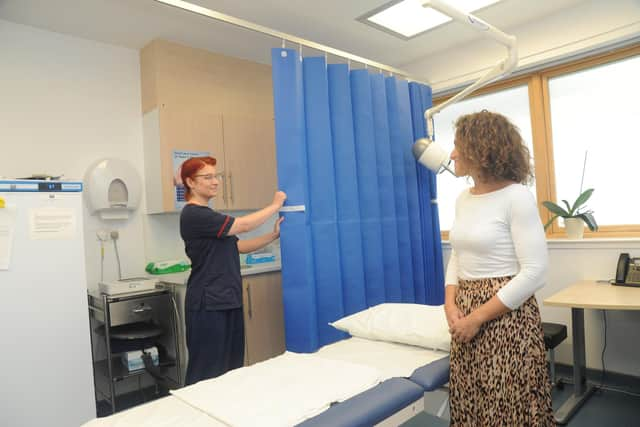

Public Health Scotland, which published the figures, noted “uptake decreased across all age groups between 2023-24 and 2024-25”.
The statistics also revealed that fewer women in the most deprived areas had been for a test within the relevant time frame – in Forth Valley only 50.5 per cent of those in the most deprived areas attended in 2024/25, compared to 65.1 per cent in the more affluent areas.
Younger women are also less likely to attend for screening: in Forth Valley 51.8 per cent of 25-29 year olds falls to 50.6 per cent in 30-34 year olds.
The age group most likely to attend in this area are 50-54 year olds with 76/2 per cent responding to invitations for screening; 68.2 per cent of 55-59 year olds; and 64.1 per cent of 60-64 year olds.
National screening for cervical cancer was introduced in Scotland in 1988 with the aim of reducing the incidence of cervical cancer, as well as picking up any cases at an earlier stage before symptoms are present.
It can find changes in women even if they feel healthy and have no symptoms. If changes are picked up early and monitored or treated, women are nine times more likely to survive cervical cancer.
Professor David Morrison, consultant in public health at PHS and director of the Scottish Cancer Registry said: “Cervical screening offers the chance to pick up early cell changes and stop cancer ever occurring. Even if cancer is found, it’s more likely to be at an early, curable stage than after it starts to cause symptoms. I encourage anyone who's offered cervical screening to take up that offer."
He added even if a woman had the human papillomavirus (HPV) vaccine at school, it’s still crucial to go for regular cervical screening.
"This is because the vaccine does not protect against all types of HPV that can cause cancer,” said the professor. “It’s the combination of vaccination and cervical screening that gives us the best chance of eliminating cervical cancer.”
In Scotland, cervical screening is offered to women and anyone with a cervix aged between 25 and 64. Some people who have changes that need to be monitored will be offered screening until they’re 70.
Further information and advice about cervical screening is available here