
Blooming Bairns: Changing climate means adapting planting strategy for Falkirk town centre
I recently walked around Falkirk town centre with other Blooming Bairns committee members to check the planting we have done in the last few years and to see what has been successful and what is struggling.
We, like many gardeners in the town are at the mercy of our ever-changing weather, a result of climate change. There is no doubt the weather is getting more erratic with long periods of dry weather, but did you know Scotland is also getting wetter? According to Scottish Water we are 13 per cent wetter than we were 100 years ago. So why are some of our plants struggling? We may be getting more rainfall but this is getting more seasonal and in intense bursts with longer periods of dry between these wet periods. As a result, what was flourishing in our gardens with constant moisture is now struggling in these intermittent dry periods.
The town centre is no different. We have found some of the planting areas to be much drier than expected and some plants are struggling, however a few plant species are coping in this dry warm period that, at the time of writing, we are experiencing. Like gardeners throughout Falkirk, we now need to adapt to the new normal.
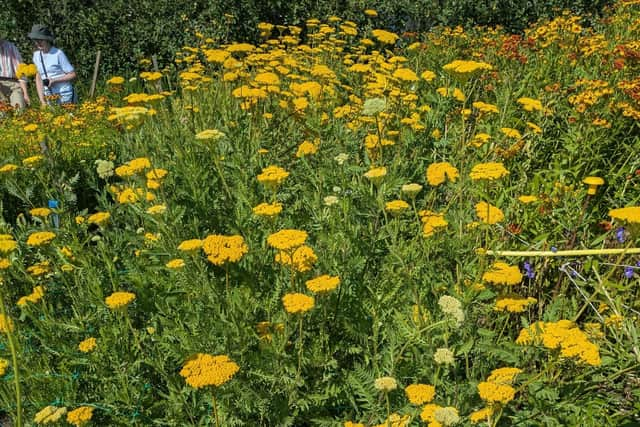
Traditional plants once used in town centres throughout the country now cannot cope without unsustainable amounts of watering and with the weather extremes we are experiencing, we cannot justify growing them anymore. A few of the plants struggling in the dry shade areas are hydrangeas and astrantias, plants we all love but maybe need to start rethinking where we plant them, they are however doing fine in the more damp shadier areas. In the sunny dry areas we have found even the plants suitable for dry sun have struggled, showing just how dry it has been. Anthemis, a plant native to the Mediterranean area with lovely daisy flowers has struggled to get going in the planters at the bottom of the high street on the Cockburn Street side, while the achillea planted here is doing great.

While we, in Scotland are just starting to experience this change I have been speaking to a gardener friend Cecilia from Plantbased gardens in Cambridge to see what the future may hold: "As a gardener and designer living in one the driest areas of England, I now will no longer be planting certain plants such as Astrantias and Hydrangeas and in some circumstances Rudbeckias as they require so much water to establish.”
While we are not there yet, on reflection as a group we are going to start using more climate resilient plants and plant these mainly in the autumn. This way the plants can grow roots out of the confines of their potted root zone and be in a better position to survive next year’s dry period.
As we adapt to the new ever changing and challenging conditions being thrown at us, it would be interesting to know what changes you are making in your gardens and what plants you have found to be drought tolerant. Send us a message on social media or the email below, we want to hear your experiences during this dry period.
Plants we are going to start using in dry shade areas are:
Euphorbia amygdaloides or wood spurge – a beautiful evergreen plant with clusters of yellow flowers in spring and summer. Suitable for dry shade.
Geranium macrorrhizum/ Bigroot Geranium – we currently grow this in dry shade and it is doing well. It has a distinctive smell but also has beautiful pink flowers the bees love.
Epimediums/ barrenwort – another plant we are growing in the town centre and is coping well with the dry period. This small tough groundcover, one of my favourites, is evergreen, has beautiful, if dainty flowers in the spring.
Plants we are going to start using in the driest sunny areas are:
Stipa tenuissima/ pony tail grass – A wispy ornamental grass we currently have in some of the barrels available for sponsorship throughout the town centre. These grasses will cope with the driest and most exposed conditions.
Calamagrostis karl foerster/ feather reed grass – Another ornamental grass, we have this one in the new Callendar Square garden and within a few of the planters on the high street and while it’s not to everyone’s taste it is doing extremely well.
Achillea – these plants are tough. In the driest of locations we have planted they are thriving and flowering. Bees and other insects love them and so do we, what’s better is you can get them in such a wide range of colours.
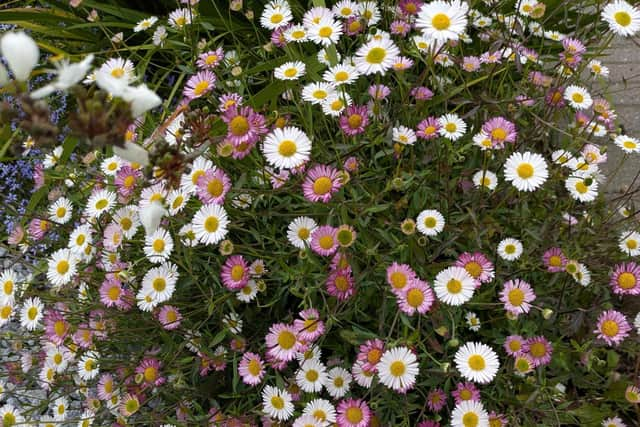
Erigeron karvinskianus/ Mexican fleabane – A lovely low growing daisy plant that can flower from spring into autumn and in some areas is semi evergreen. This plant will happily self seed around where it’s happy but we’ll try and control it and edit it out where it shouldn’t be growing. Another plant that is loved by bees and pollinators, as well as us.
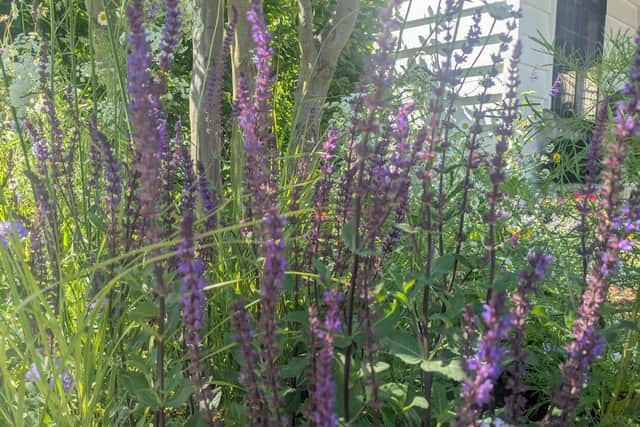
Salvia nemorosa/ woodland sage – another beautiful perennial that will survive future droughts we might face. This plant sends up the most beautiful purple flowers on stiff stalks that will gently sway in the breeze. Cut back after it has finished flowering to get a second, and maybe a third flush of flowers throughout the season.
Get Involved! Blooming Bairns is calling on community members to join our efforts. Whether you’re a seasoned gardener or just looking to lend a helping hand, there’s a place for you in our team. For more information on upcoming events and how to participate, please visit our Facebook page or contact us at [email protected].