
Looking back with Ian Scott on the area's links to the salt industry

Nowadays it is normal for dietary experts to warn us against the consumption of salt - or at least too much. Common old sodium chloride which was once the essential addition to meat or fish is now a big no-no. Amazing then to think of just how important it was to the lives of our forefathers and especially in this part of the country.
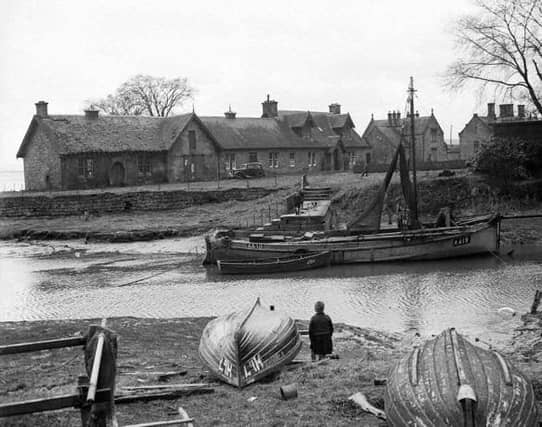
For hundreds of years along the shores of the Forth great iron salt pans made salt from the waters of the river for export to towns and villages all over Scotland and far beyond to the lands on the other side of the North Sea.
Of course in those early days it was not for culinary use but for preservation of meat and fish in the days before refrigeration. This most important use was, of course, well known to mankind for tens of centuries – the very word salary comes from the Latin salarium and there is a long held tradition that Roman soldiers were paid in part with salt and we are familiar with the old saying about a worker being “worth his salt”. In the mediaeval period in Scotland the early abbeys took the lead in encouraging salt making on the land they owned. Newbattle, Holyrood and Dunfermline list salt pans on the Forth among their most valuable assets.
The process of making salt was in principle very simple. The large square metal pans roughly 20 foot by 10 with coal fired “furnaces” below were set up in communities close to the river and, as the tide came in, the salty water was allowed to flow into settling ponds for a period before being transferred to the pans. Alternatively the water would be captured in large bucket devices that were filled at the water’s edge then swivelled round and deposited in the ponds and pans. The fires would be backed up and the heat would evaporate the water leaving the salt.
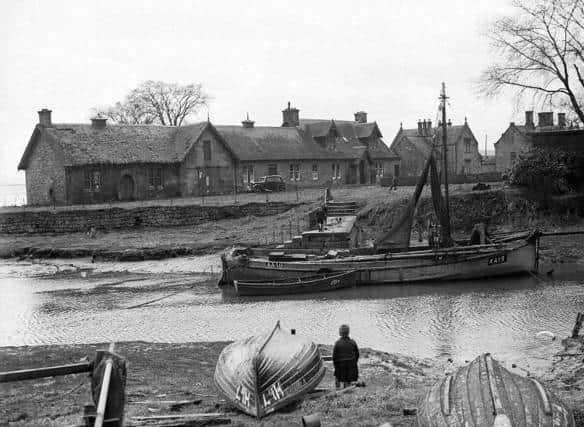
Of course the river water was full of impurities so at a critical stage the salters would pour barrels of blood from slaughtered cows, pigs or sheep onto the top of the boiling water. This would gather the impurities into a bloody scum which would be drawn off with wooden rakes. Bo’ness was one of the main centres as the names Grange Pans and Pan Brae remind us. But there was also Dunmore (once called Elphinstone Pans), Kincardine, Prestonpans and Culross where Sir George Bruce operated nearly pans in the early 17th century.
It is interesting to note that church restrictions on Sunday working meant that the fires below the pans were allowed to cool slowly instead of being forced by the continuous heat. The product which emerged was much less in quantity but finer in quality. It was in high demand for cooking and fetched higher prices. It was called Sabbath Salt!
More seriously, the image of elderly women stirring the acrid boiling water over the flames then raking blood across the surface in the hours of darkness have suggested that the salt pans played some part at least in creating the familiar image of witches which was found all along the Fife coast as well as on our side of the water.
But more seriously still. the workers were among the poorest rewarded and most abused in the period and, until the end of the 18th century were, like the colliers, virtual slaves to their wealthy masters.