
Looking back with Ian Scott: The story of Falkirk in 12 objects, part two
Last week I wrote about ‘The Story of Falkirk in 12 objects with my first four choices. This week here are four more that I personally value and figure in much of the writing I have done over the years.
Hanging on my wall at home is a reproduction of the earliest map we have of the Falkirk district. We all tend to refer to it as Pont’s Map though it was printed in Amsterdam in 1654, The Pont referred to is the cartographer Timothy Pont who worked across Scotland in the late 1500s and provided hand written notes and drawings which allowed Johan Blaeu to prepare the beautiful coloured map that tells us a huge amount about our area in the 16th century.
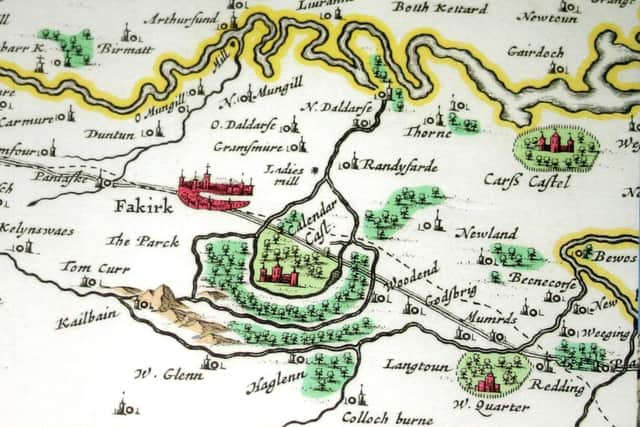

An astonishing number of local place names appear though the spelling is often quite peculiar. We have Fakirk, Lairbarr, Sheelhill, Carmurs and dozens more. We might imagine Timothy riding through the district and shouting to a local “What do you call this place” and then scribbling down the answer that he thinks he hears! Pont’s Map - a delight to look at and learn from.
My second choice is the Steeple Bell from 1697 which is on display on the ground floor of the modern steeple as part of our Steeple Heritage Centre.
When the town authorities decided to build a steeple in the centre of the High Street James Livingston, the 4th Earl of Callendar gifted this bell which was cast in Edinburgh at the foundry of John Meikle. It served from 1697 to 1804 before being transferred to serve another century in the new steeple.
In 1815 a new bell cast by the Mears Company in London joined the old one and is the one we hear ringing today. It says ‘Let Falkirk Flourish’. The old bell was pensioned off at the end of the 19th century and has been kept in the Burgh Buildings and then Falkirk Museum. Unfortunately the steeple is closed at present for upgrading of the fire precautions but we hope to open for our new season in April.
My third choice is a drawing from 1810 which shows the distribution of seats in the new Parish Church.
This was done in proportion to the wealth and power of the town’s leading men and it is no surprise that most of the seats bear the name of either William Forbes of Callendar or Lord Dundas.
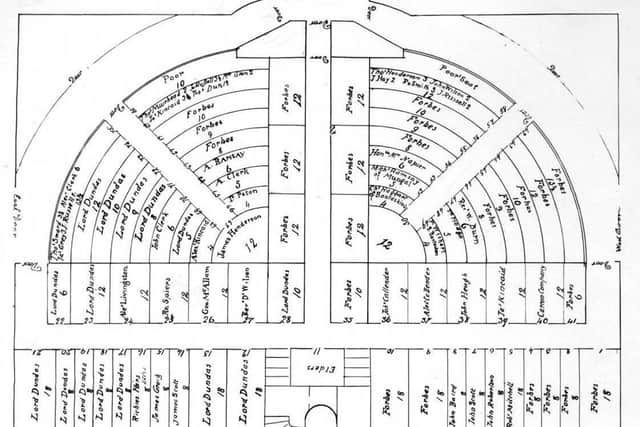
There are a few with individual seats like John Heugh of Gartcows and “poor seats” far away from the pulpit. Some legends tell us that the origins of the phrase ‘let the weak go to the wall’ has its origin in this practice.
This document is tangible evidence of the powerful grip that the richest people had over all matters related to the church in the early 19th century.
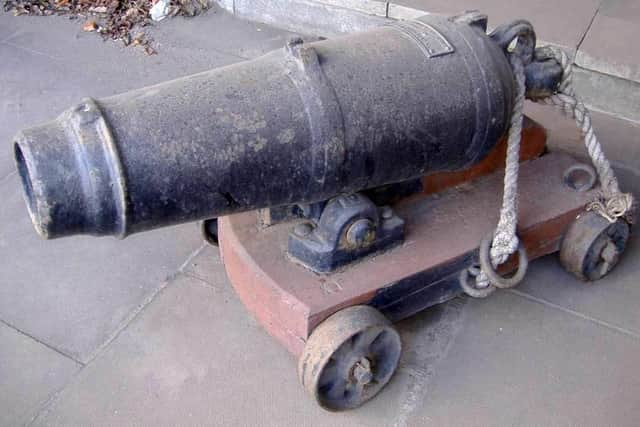
My final choice this week is the mighty Carronade, of which there a few in the district. More that anything else it was the invention of this gun at the works in the 1770s which elevated Carron from a new kid of the block to a powerhouse of the iron industry.
The first shots fired at Trafalgar came from a Carronade aboard Nelson’s Victory and the Duke of Wellington demanded Carron ordnance for his battles with Napoleon.
Next week I will reveal my final four choices. What have I missed? Feel free to tell me what you think on [email protected]