
Looking back with Ian Scott: The 4th Earl of Kilmarnock lost his head for Charlie
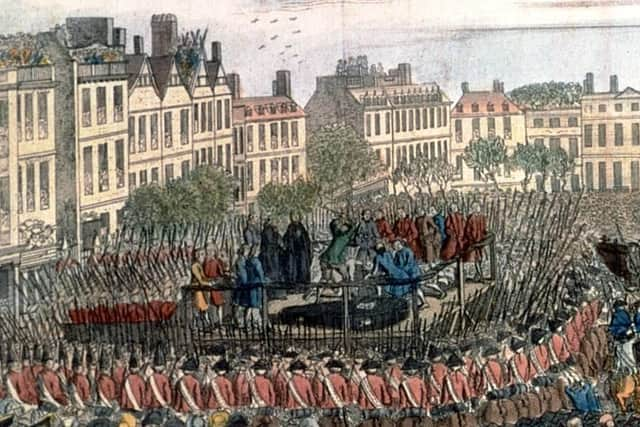
One hundred and eighty years ago last week, on the 18th August 1746, the executioner’s axe removed the head of William Boyd, the 4th Earl of Kilmarnock.
Condemned for treason he paid the price for supporting the failed Jacobite Rising of Bonnie Prince Charlie and thus ended his time as Falkirk’s leading man and resident of Callendar House with his wife Lady Ann Livingston.

William had married Anne back in 1725 a decade after her father James, the Earl of Callendar, had lost his titles, house and lands for supporting Charlie’s father, the Old Pretender, in 1715.
Lady Ann and her new husband were allowed to rent Callendar House and he soon began to act as Falkirk’s first citizen. He presided at meetings of the Heritors and the Falkirk Merchant Society and in 1740 he was chosen as Worshipful Master of the Falkirk Lodge of Freemasons.
When Prince Charlie landed in the Highlands in 1745 the Earl thought this offered his family a chance to regain their titles and lands.
Lady Anne urged him to stay out of the rising, fearing that her work to re-establish Episcopalian ‘meeting houses’ would suffer if she was drawn into another failed intrigue.
The Prince stayed the night at Callendar House on September 8 but Kilmarnock waited until after the Jacobite triumph at Prestonpans before writing to his wife “I am in my boots for the Prince”. It was a decision he would live to bitterly regret. However, as a way of hedging his family bets, his son and heir James had enlisted in the Government army just in case.
The Earl tried to raise a detachment of dragoons in Falkirk and from his family lands in Kilmarnock but was not all that successful. He was given the rank of Colonel in the Prince’s army and rode to Derby and back with Charlie and was in command of dragoons when the two armies met on that wet and windy afternoon in Falkirk. His local knowledge was vital throughout this part of the campaign and he was again by the Prince’s side as the armies moved north to their final encounter at Culloden.
He was captured on the battlefield and there is a very poignant account of him being dragged bareheaded in the rain by his captors. At this moment his son James emerged from the redcoat ranks embraced his father and placed his own hat on the Earl’s head.
However it was not that long before he had no head to put a hat on! Like the other leading nobles he was tried for treason and pleaded for his life saying he had made a great mistake. It was to no avail.
The best the King could offer was to substitute the axe in place of the usual butchery. On August 18, 1746 he had his head cut off on Tower Hill before a huge crowd of spectators. His broken hearted wife was said to have retired to Kilmarnock where she wept herself to death.
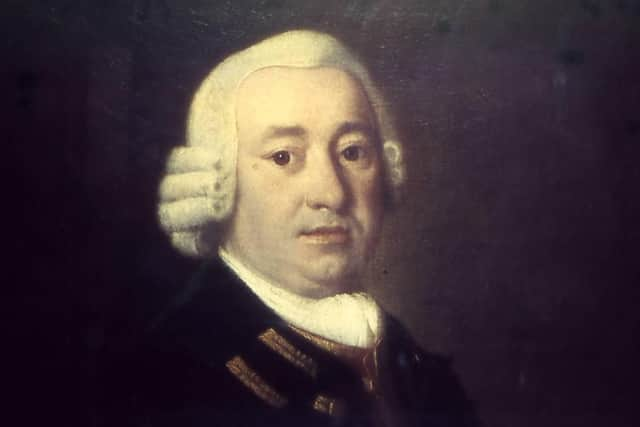
A portrait of the Earl still hangs in Lodge 16 in Grahams Road though the minute book for the period is missing. His son who became Earl of Errol through his mother’s side lived on in the House and played his part in Falkirk life until the arrival of William Forbes in 1783. By then the failed Rising was little more than a memory and the unhappy Earl was long forgotten.