
Looking back with Ian Scott on Mary Queen of Scots' Falkirk connections
I have to admit that I have always had a soft spot for Mary Queen of Scots whose short and dramatic life quickly became the stuff of legend and has remained so for well over four centuries.
Every time I am in London I take the chance to pop into Westminster Abbey to pay my respects at her beautiful marble tomb and of course to cross the aisle to give a long angry stare in the direction of the memorial to Queen Elizabeth I who signed Mary’s death warrant in February 1587. After the execution, Mary’s body remained for many months in Fotheringhay Castle before a formal burial in Peterborough Cathedral. Not long after her son James became King of England he made up for his silence at the time of the execution by demolishing the castle and ordering the fine tomb in London which was to be at least as grand as Elizabeth’s.
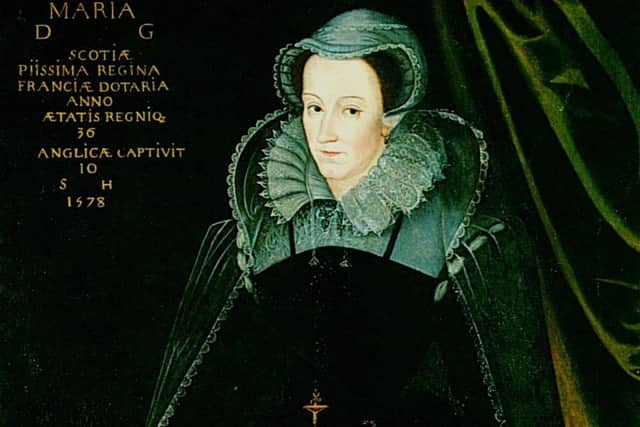

In Falkirk we have a special interest in Mary because she was a regular visitor to the town throughout her life. During the 19 years she spent under house arrest in England, Lord William Livingston of Callendar House and his wife Agnes were among her closest companions. Both undertook special missions on her behalf and suffered as a result.
The Livingston connection went back to the time when William’s father, Alexander the fifth Lord of Callendar, was appointed as one of the baby Queen’s guardians in 1542. His daughters, Mary and later Magdalen, were maids of honour to the Queen (part of the famous four Maries) and went with her to France for a long sojourn in the sun before the Queen’s return to Scotland in 1561.
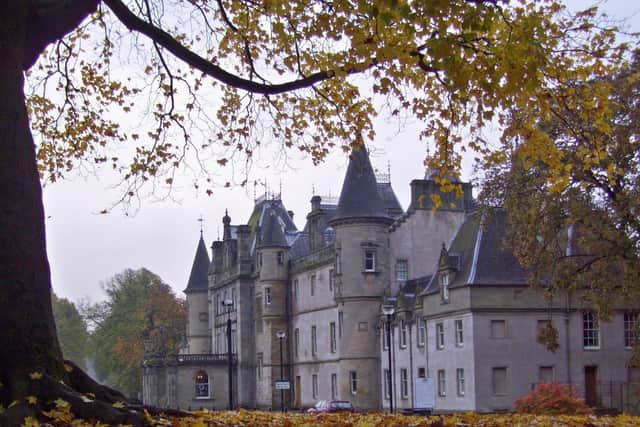
Over the next six years she was a regular visitor to Callendar House and on one occasion witnessed the marriage of Mary Livingston to whom she gave many presents including Auchtermuchty and Millport! On that day too she had to listen to a fiery sermon from her old adversary John Knox.
After her marriage to her cousin Lord Darnley which was attended by Lord William things went downhill for the Queen with her enemies growing in number. Despite the fact that the Livingstons had adopted the new reformed Protestant religion while Mary remained a staunch Catholic, the family stayed loyal to her and she continued to show them great favour.
Some accounts say that the last night she spent with Darnley was in Callendar House just a short time before his murder in Edinburgh. As things began to unravel Lord William and men from Falkirk fought by her side at Carberry and later Langside where her cause finally came to an end and her exile in England began.
Back in the days when the Forbes family owned the House the rooms occupied by Mary were given over to a collection of memorabilia including engravings, paintings and sculptures telling the story of the Queen. The most interesting item was a lovely embroidered panel with an M S monogram which sold for £13! Today some experts think it might have been a gift made for the Livingstons by the Queen’s own hand. She was certainly a fine needlewoman. Today it is in private hands in Bridge of Weir where I was able to see it nearly 40 years ago.
If Rabbie Burns deserves a plaque for his short overnight stop in 1787 then Mary’s regular visits to our town surely deserve nothing less.