
Robotic Assisted Surgery to be introduced by NHS Forth Valley
Plans to introduce Robotic Assisted Surgery (RAS), which has the potential to significantly enhance the delivery of complex surgery, have been approved by NHS Forth Valley.
The health board approved the business case for the initiative at its meeting this week, having secured £2.5 million of Scottish Government funding.
The business case sets out plans to expand access to advanced robotic-assisted procedures locally, ensuring NHS Forth Valley keeps apace with rapid technological advances in surgical care.
RAS has the potential to enhance the delivery of complex surgery across colorectal, gynaecology and urology services, including cancer care.
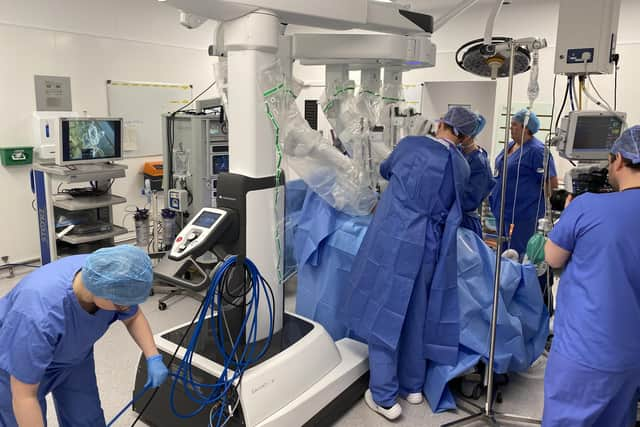

Its introduction represents an important step forward for patient outcomes, workforce sustainability and future surgical training.
RAS enables surgeons to operate with a highly magnified, three-dimensional view of the surgical field, enhanced lighting and exceptional precision. Although the instruments are held by a robotic system, all movements are fully controlled by the surgeon from a nearby console.
The technology eliminates unintentional hand tremor, improves control and fluidity of movement and allows safer, more precise access to complex anatomical areas.
Clinical evidence shows that these advances can result in shorter operating times, reduced blood loss, better nerve preservation and a lower risk of complications.
For patients, this may lead to less post-operative pain, fewer complications, shorter hospital stays and a quicker return to normal daily activities.
The introduction of Robotic Assisted Surgery is also expected to benefit the wider health system with shorter hospital stays helping free up inpatient beds and improving patient flow across the Forth Valley Royal Hospital site.
Additional efficiencies are anticipated through reduced use of post-operative pain relief, fewer readmissions related to complications, and shorter procedures that reduce the use of carbon dioxide gases in theatre.
Having an in-house robotic surgery service would reduce the need for patients and clinicians to travel out with Forth Valley for treatment, helping to lower the overall carbon footprint.
RAS also offers benefits for staff including improved ergonomics reducing physical strain on surgeons, helping to minimise fatigue and injury while supporting long-term wellbeing and career sustainability.
Dr Julie Christie, NHS Forth Valley’s Associate Medical Director for Women, Children and Sexual Health, said: “Approving the business case for robotic assisted surgery reflects our commitment to improving care for patients across Forth Valley. This investment would allow us to deliver high-quality complex surgery closer to home, improve outcomes for patients undergoing cancer treatment, and strengthen our ability to recruit, retain and train skilled staff.”
Subject to all necessary final approvals, detailed planning will progress with the aim of introducing robotic-assisted procedures on a phased basis from the end of March 2026, following the installation of a new Da Vinci XI dual-console robotic system at Forth Valley Royal Hospital.