
Denial children and young people waiting three years for CAHMS service in Forth Valley

Health chiefs have denied families are waiting three years for their youngster to receive mental health support.
Last week, a report to the NHS Forth Valley board told members of improvement in waiting times, particularly for cancer and those waiting to access the Child and Adolescent Mental Health (CAHMS) service.
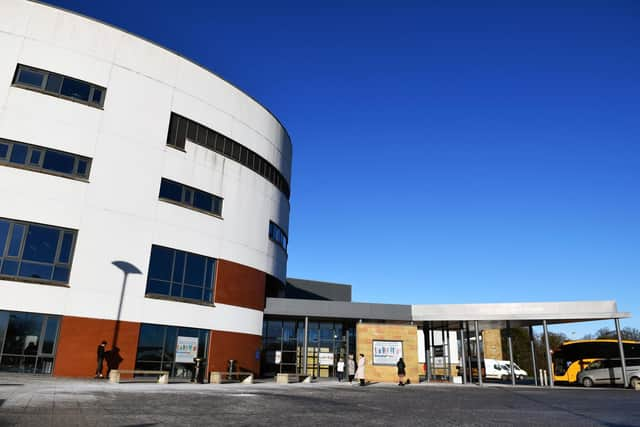

However, this was met by an outcry from many readers who spoke of experiencing waits much longer than the 18 month target with some even claiming that health staff told them there was a “three year” wait.
This week NHS Forth Valley reiterated that the “vast majority” of children and young people referred start treatment within 18 weeks.
A spokesperson for the health authority said: “However, like other NHS Boards across Scotland, we have seen a significant increase in referrals for children with neurodevelopmental conditions such as autism or ADHD.
"These children are normally referred to our paediatric service not CAMHS unless they also have a mental health condition.
"Due to the large increase in demand, some families are experiencing longer waiting times for neurodevelopment services and work is currently underway to explore options to increase capacity and reduce waiting times.”
The spokesperson added: “It is important to highlight that families do not need a formal diagnosis of autism or ADHD to access additional support for their child as a range of services and support for children with neurodevelopment conditions is provided by local councils, education and some charitable organisations.”
Waiting time figures for July 2024 show 98 per cent of patients referred to CAMHS started treatment within 18 weeks, well above the national average of 83 per cent and exceeding the national waiting times target of 90 per cent.
In 2021, the board was criticised for having average waiting times of 57 weeks for young people in crisis, with 60 per cent waiting longer than the 18-week target.
The board met the national waiting times target for the first time earlier this year and members were told that performance has been maintained and even improved over the last six months.
Cancer waiting time figures have also seen marked improvement, with all patients beginning treatment within 31 days of the decision to treat, exceeding the national cancer treatment target of 95 per cent.
While the 62-day target is much more challenging – the time from urgent suspicion of cancer referral to first cancer treatment – board members welcomed news that the Forth Valley is well above the national Scottish average.
In the period April to June 2024, 83 per cent of local patients waited less than 62 days from urgent suspicion of cancer referral to first cancer treatment, compared to an average of 73 per cent across the rest of Scotland.
Members were told that work continues to maintain and build on this performance over the coming months.
In addition, the number of people waiting for a first outpatient appointment has reduced significantly over the last year (from 19,902 in July 2023 to 13,740 in July 2024) – a reduction of 30 per cent.
The number of people waiting beyond 12 weeks has also halved in the same period.
Waiting times for the hospital’s emergency department, however, show little change from last year.
The report showed that in July 2024, 49.8 per cent of patients waited longer than the four-hour target time to be either treated or discharged.
A total of 2,476 patients waited longer than the 4-hour target across both the ED and Minor Injuries Unit (MIU); with 936 waits longer than eight hours, 376 waits longer than 12 hours and 52 waits longer than 23 hours.
The report says 1420 patients waited more than four hours for their first assessment, as the hospital struggled with “capacity and flow”.
Waiting for a bed accounted for 538 patients waiting beyond four hours.
Kerry Mackenzie, NHS Forth Valley acting director for strategic planning and performance, said: “Significant progress has been made in reducing cancer and mental health waiting, however we recognise that there is still more to do in a number of service areas.
“These include psychological therapies where, although our performance has improved in recent months, it is still below the national average.
“We are also continuing to work closely with colleagues to reduce waiting times for local patients who require more specialist tests and treatments in other regional or national centres out with our area, including the Beatson West of Scotland Cancer Centre in Glasgow.”