

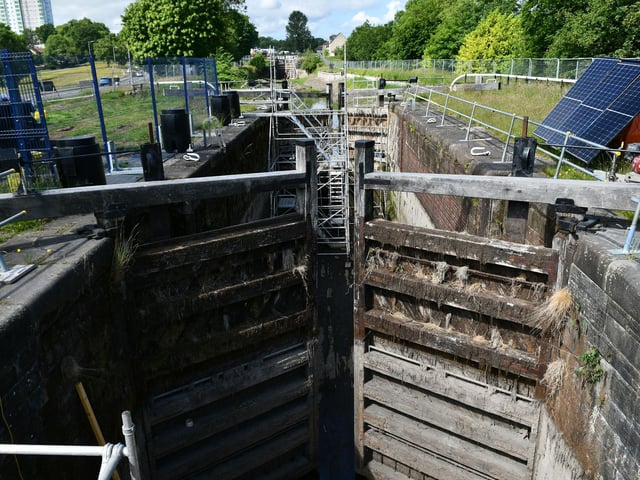
It is the biggest programme of engineering works on the canal network for 25 years as Scottish Canals works with contractor Mackenzie Construction Ltd to install a lock bypass at Lock 16 and to replace the timber gates along the Falkirk Flight of the canal.
While there was no water in the canal between March and August, the team at Scottish Canals iscovered some new mason’s marks on the canal walls and stonework, including marks dating back to 1770 – you can even see where a stonemason engraved the date. And this was exactly the time when civil engineer John Smeaton was overseeing the construction of the canal.
The practice of marking up stones is ancient and can be found on early Egyptian and Roman structures. In Scotland, the practice started in the medieval period and marks can be seen on castles, churches, bridges and cathedrals – the same stonemasons' marks could appear on structures all over the country as they moved from project to project.
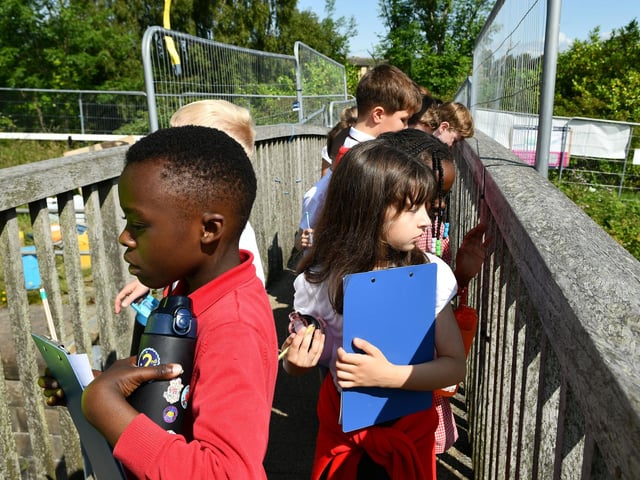
To learn more about the history of stonemasonry in their area, in June pupils from St Francis Xavier’s P3 visited the canal. Chris O’Connell, heritage manager at Scottish Canals, took three classes on a tour of the canal to explain more about the history, showed them artefacts made in the local foundries, including a suspected cannonball, and invited them to design their own mason marks.
At the nearby former AG Barr factory, Scottish Canals is working with Historic Environment Scotland to create a Centre of Excellence for Canals & Traditional Skills, which will include facilities for stonemasonry training, a heritage skill that offers many opportunities today.

1. St Francis PS canal visit
Scottish Canals heritage manager Chris O’Connell answered questions from the children of St Francis Xavier Primary School on a visit to the Forth & Clyde Canal earlier this summer. Photo: Michael Gillen

2. St Francis PS canal visit
Youngsters taking a keen interest in seeing the canal with most of the water out. Photo: Michael Gillen
3. St Francis PS canal visit
Pupils were also interested to see the lock gates which are due to be replaced. Photo: Michael Gillen
4. St Francis PS canal visit
Lots capturing the attention of these pupils. Photo: Michael Gillen