
End of an era as Grangemouth refinery ceases processing crude oil

The Grangemouth refinery has stopped processing crude oil, its owner Petroineos has confirmed today (Tuesday).
Over a century since work first began on the shores of the Firth of Forth, Scotland’s only refinery – and the UK’s oldest, has ceased working.
Last September, the company announced refining activities would cease in 2025 as it transitions to becoming an import terminal for finished fuels.
Grangemouth MP Brian Leishman said Scotland “is a victim of industrial vandalism and devastation” as a result of the closure.
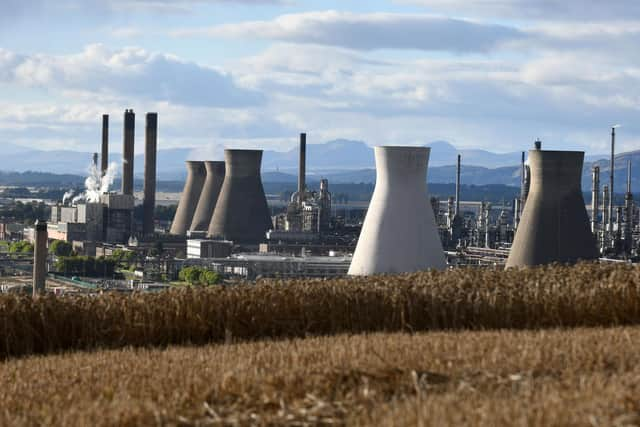

Around 430 jobs have been lost but it is feared many more could be impacted by the closure.
It is understood many of the workers have already accepted voluntary redundancy ahead of this week’s announcement.
Unite the union said politicians had “failed” the workers by not protecting their jobs and warned they will face the ‘electoral wrath’ of voters.
The union added that political leaders including Prime Minister Keir Starmer and First Minister John Swinney have failed to grasp the magnitude of the “industrial vandalism” being unleashed on the industrial heartland.
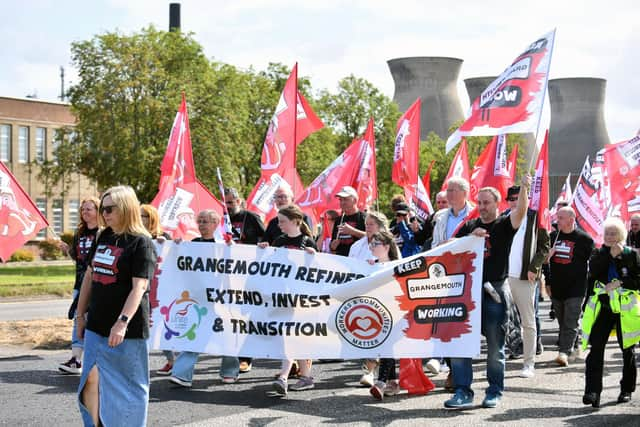
Earlier this month, the SNP called for the refinery to be nationalised, but this was rejected by the Labour UK government.
In March, a long-awaited report commissioned by the Scottish and UK governments, known as Project Willow, aimed to give the site a future in low-carbon energy.
However, it warned that it would need £3.5 billion of private investment for the projects to be brought to fruition and develop the supply chain.
Confirming the end of oil refining at Grangemouth, Iain Hardie, regional head of legal and external affairs for the company, said: "Petroineos has invested £50 million in creating a modern import and distribution terminal capable of receiving finished fuels by sea for onward distribution to customers around the country.
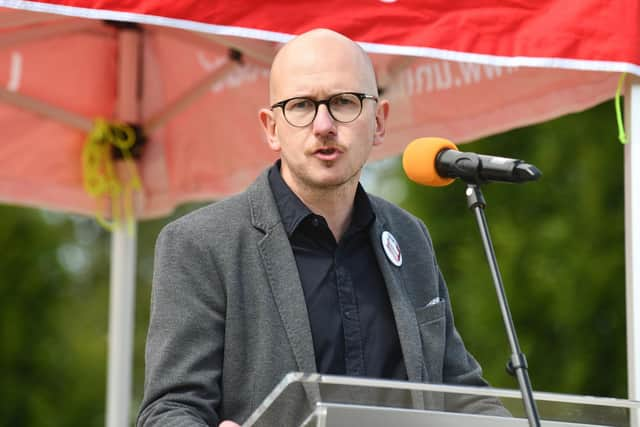
"From today, we will be importing all the products necessary to meet Scotland's demand for transport fuels."
He said that about 70 refinery staff will remain to work on the new business.
Paying tribute to the refinery’s workforce, Mr Hardie added: "Our colleagues have shown incredible commitment, dignity and resilience during months of uncertainty regarding the future of this facility, through the consultation period, phased shutdown and the start of refinery decommissioning.
"It has been a challenging period but their professionalism has ensured security of fuel supply to our customers across Scotland and beyond."
Reaction to the announcement was swift with First Minister John Swinney saying: “The end of refining at Grangemouth is a very sad day for Scotland.
“This news is very damaging for workers and everyone in the area.
“The Scottish Government will work to secure a future for the Grangemouth community and agreement to the Acorn Carbon Capture project is essential.”
While speaking in the House of Commons, local MP Brian Leishman said: “Today is the end of over a century of refining at Grangemouth.
“Scotland once again is a victim of industrial vandalism and devastation, and I don’t want anyone in this chamber to dare mention a ‘just transition’, because we all know that the Conservatives when in power and the SNP currently in Holyrood did nothing to avert this catastrophic decision happening.”
Mr Leishman shook his head and shouted “not enough” as Energy Secretary Ed Miliband replied: “Grangemouth has a really important role in Scotland.
“What I would say to him and to others is this Government, as soon as it saw the situation it inherited, put money in to help the workers and has made this huge investment commitment of £200 million working hand-in-glove with the Scottish Government so we absolutely build a future in Grangemouth.”
Derek Thomson, Unite Scottish secretary, said: “The first wave of redundancies are taking place at Grangemouth and with it the historic end of oil refining in Scotland.
”John Swinney and Anas Sarwar will face the wrath of voters for their broken promises to the workers and the people of Grangemouth.
"Anas Sarwar pledged hundreds of millions to save the refinery and to fund a transition to renewable industries under a Labour government. Instead, not one job will be saved at the refinery, not one job will be created for years by Project Willow, and not one penny of the £200m National Wealth Fund can be unlocked without private investment.”
Malcolm Bennie, director of place at Falkirk Council said: “We are understandably sad to see the end of refinery operations at Grangemouth, and our focus at this time is on ensuring the workforce and local supply chain is supported as much as possible.
“The manufacturing climate across the UK is particularly challenging at this time but there are plenty of reasons to be positive about the medium-to-long-term future of the Grangemouth Industrial cluster. The £600m Forth Green Freeport and £140m Falkirk and Grangemouth Growth Deal will drive infrastructure improvements that protect the area’s status as a key hub for business and trade in the UK and contribute to the Just Transition plan.
“In addition, the UK and Scottish Governments’ commitments to Grangemouth are clear with £225m available for the development of new industries. We can already see the impact this is having from the high-levels of interest from new companies considering locating to the area in the coming years.”
Scottish Green MSP Gillian Mackay said the announcement was “devastating” for the area, adding: “It is a further blow to the community. It is deeply disappointing that Labour have not stepped in to protect workers or to future-proof jobs in the same way that they have with steelworks down south.
“Grangemouth is my home, and it has been frustrating to see promises being made and dropped as easily as Petroineos’ detached billionaire has now dropped the workforce.
“I am concerned about what this will look like in the short-term for the town. Warm words will not pay the bills.
“Grangemouth holds a lot of potential, as do the workers who offer the skills we need for transitioning away from fossil fuels.”
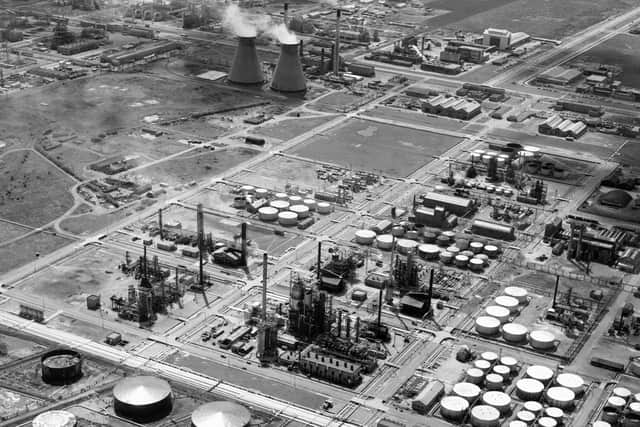
The Grangemouth Refinery was established in 1924 by Scottish Oils, a BP subsidiary, to process crude oil from the Persian Gulf.
The refinery was strategically located due to its transport links and available skilled labour.
Over the years, it expanded to meet growing demand for fuels and petrochemicals, eventually connecting to the Forties Pipeline – which carries crude oil from North Sea installations to the nearby Kinneil terminal – in 1975.
At its height, the refinery processed 210,000 barrels of oil every day.